


Can You Use a Full‑Size String on a Fractional Violin?
What happens when the only spare string before a concert is the wrong size?
It’s the nightmare scenario: you’re packing up for a concert, and a string breaks. A friend saves the day by offering a spare… but it’s for a full‑size violin, and you play a three‑quarter size.
So the obvious question:
Can you use it?
The short, practical answer is yes — in a pinch, it will work. The violin will tune up, you’ll get through the rehearsal or concert, and nothing catastrophic will happen.
But — and this is the important part — it is not the same string, and there are good reasons to switch back to the correct size as soon as you can. Let’s explore why.
Same pitch, different tension
All violin G strings are tuned to the same pitch, whether they’re made for a 4/4 or a 3/4 instrument. What changes is the length of the vibrating string.
A shorter violin has a shorter string length. When you put a full‑size string on a smaller violin, that string doesn’t need to be pulled as tight to reach pitch. The result is lower tension.
That lower tension can feel:
Softer under the fingers
Slightly slower or less focused under the bow
A bit warmer, but sometimes less clear
Aren’t fractional strings just shorter versions?
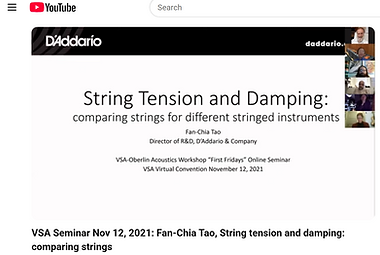
I recently discovered the phenomenal Oberlin Acoustics Workshop videos on YouTube, where some of the best luthiers of today discuss the acoustics of violins. I'll usually have one of these on as I work on violins during the day. If you want to deep dive into string technology, check out the video that prompted this line of thought here: https://www.youtube.com/watch?v=0hXjuQDTxis
Fractional strings are not simply full‑size strings cut shorter. String makers carefully adjust the mass of the string so that it reaches the same playing tension on a shorter instrument.
I recently measured two D’Addario Prelude G strings, both labeled medium tension:
4/4 G string
Total mass: 1.57 g
Length: 23 inches
3/4 G string
Total mass: 1.77 g
Length: 20.5 inches
When you look at mass per inch, the 3/4 string is about 25% heavier than the 4/4 string. That extra mass is intentional — it compensates for the shorter length so the tension feels “normal” when tuned to pitch.
In other words, the string maker already did the math so the violinist doesn’t have to.
What happens if you mix sizes?
Full‑size string on a 3/4 violin
Lower tension than intended
More winding around the peg
Generally playable, especially short‑term
3/4 string on a full‑size violin
Higher tension than intended
Silk winding may end up over the nut
Increased stress on the instrument
Not recommended except in an emergency
Neither situation is ideal — but the first is far safer than the second.
Why changing one string affects the others
When you bring a new string up to pitch, you’re not just changing that string. You’re changing the total force on the violin.
The neck, bridge, and top flex slightly in response, which is why:
Other strings often go out of tune when you change one
This effect is more noticeable with steel‑core strings
Gut and synthetic strings tend to be more forgiving
It’s a reminder that a violin is a system, not four independent strings.
A quick personal note
I come at this topic with both a musician’s and an engineer’s curiosity. The physics of strings — how length, mass, tension, and stiffness interact — is endlessly fascinating, and it has a real, audible impact on how an instrument feels and sounds.
The takeaway isn’t “panic if you use the wrong string.” It’s simply this:
Modern strings are carefully engineered for specific instruments. When you match the string to the violin, everything works better.
So yes — borrow the string, play the concert, enjoy the music. Just remember to put the right one on when you get home.
